Mechano-Chemical Information Processing
Statistical physics of computing with soft matter
What makes a collection of chemical reactions into a functioning living organism?
How do biological cells perceive and manipulate their noisy world at the same time?
How does chemistry and mechanics come together to create intelligent spatiotemporal patterns?
These questions are at the heart of our research. Information processing in soft and living matter often involves a combination of chemical reactions, mechanical forces, and diffusion, without a clear separation between their timescales. We quantify the dynamics and optimal designs of such information processing. For this, we develop novel theoretical and computational techniques centered in statistical physics and information theory. The theoretical predictions are tested through ongoing collaborations with several experimental groups. Our goal is to understand the fundamental design principles of mechano-chemical computation in biological and synthetic systems.
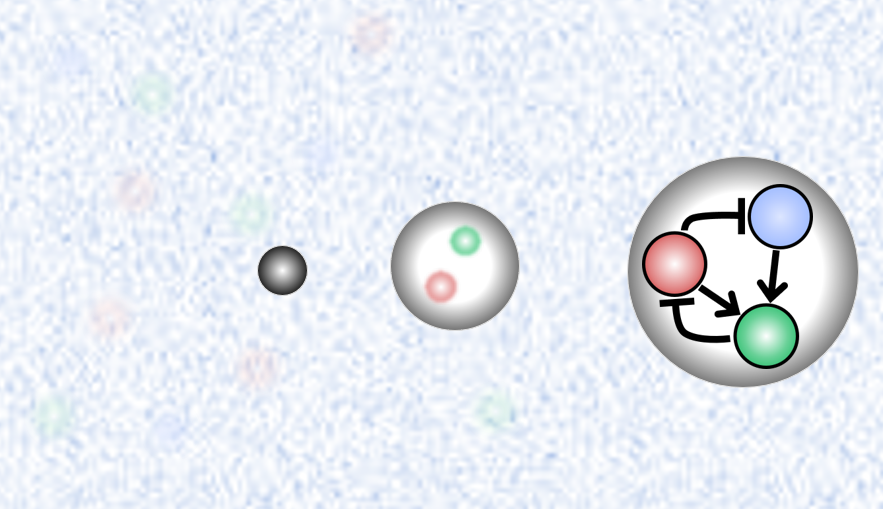
Condensate formation under chemical signals
How do rare events affect information processing? We investigate how the nucleation and phase-separation of biomolecular condensates is used by cells to process chemical signals.

Actuation of motile bacteria
How does sensing and actuation jointly give rise to biological function? We explore how motile cells convert chemical signals into mechanical actuation in order to swim.
- A. Das & P. R. ten Wolde, Navigation driven by bidirectional information transmission between sensing and actuation (2026), arXiv

Collective rearrangements of cells
Can the information from biochemical signaling give rise to spatial patterns? We uncover how cells rearrange in tissues through mechano-chemical coupling.
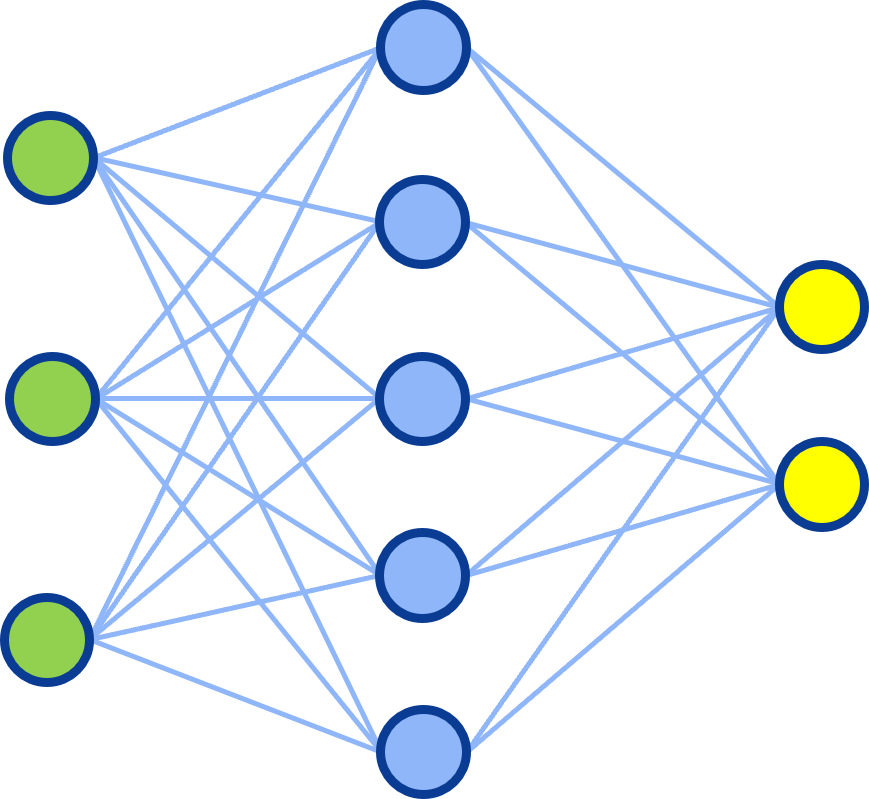
Information theory of soft matter
How do we quantify information transmission in complex, nonlinear, stochastic systems? We develop groundbreaking theoretical and computational tools using statistical physics, stochastic physics and information theory.